[Coding test] (바킹독 알고리즘) 연결 리스트 (feat. Python)
바킹독 알고리즘 강의 「연결 리스트」 내용을 바탕으로, 코딩 테스트에서 코드 작성 방법을 Python 기준으로 정리한 글입니다
[Coding test] (바킹독 알고리즘) 연결 리스트 (feat. Python)
INTRO
🔑 KEY POINT
연결 리스트의 성질
- k번째 원소를 확인/변경하기 위해 O(k)가 필요함
- 임의의 위치에 원소를 추가/임의 위치의 원소 제거는 O(1)
- 원소들이 메모리 상에 연속해있지 않아 Cache hit rate가 낮지만 할당이 디소 쉬움
기능과 구현
연결 리스트 구현 및 생성
1
2
3
4
5
6
7
8
9
10
11
12
13
14
15
16
17
18
19
  # Node 구현
  class ListNode:
      def __init__(self, val=0, next=None):
          self.val = val
          self.next = next

  # Node 생성
  node = ListNode(1)

  # 연결 리스트 구현
  class LinkedList:
      def __init__(self, data):
          self.head = ListNode(data)

      def append(self, data):
          cur = self.head
          while cur.next is not None:
              cur = cur.next
          cur.next = ListNode(data)
traverse 함수
1
2
3
4
5
6
7
8
9
10
11
12
  def traverse(self):
      prev = None
      cur = self.head

      while cur is not None:
          nex = cur.next
          cur.next = prev

          prev = cur
          cur = nex

      self.head = prev
insert 함수와 erase 함수
1
2
3
4
5
6
7
8
9
10
11
12
13
14
15
16
17
18
19
20
21
22
23
24
25
26
27
28
29
  def get_node(self, index):
      count = 0
      node = self.head
      while count < index:
          count += 1
          node = node.next
      return node

  # insert 함수
  def add_node(self, index, value):
      new_node = ListNode(value)

      if index == 0:
          new_node.next = self.head
          self.head = new_node
          return

      node = self.get_node(index - 1)
      next_node = node.next
      node.next = new_node
      new_node.next = next_node

  # remove 함수
  def remove_node(self, index):
      if index == 0:
          self.head = self.head.next
          return
      node = self.get_node(index-1)
      node.next = node.next.next
🔗 강의 링크
문제 풀이
강의에서는 C++ 언어로 문제를 풀이하셨고 저는 파이썬으로 문제를 풀려고 합니다.
문제에 대한 설명 또한 강의자님의 설명을 그대로 가져온 것입니다.
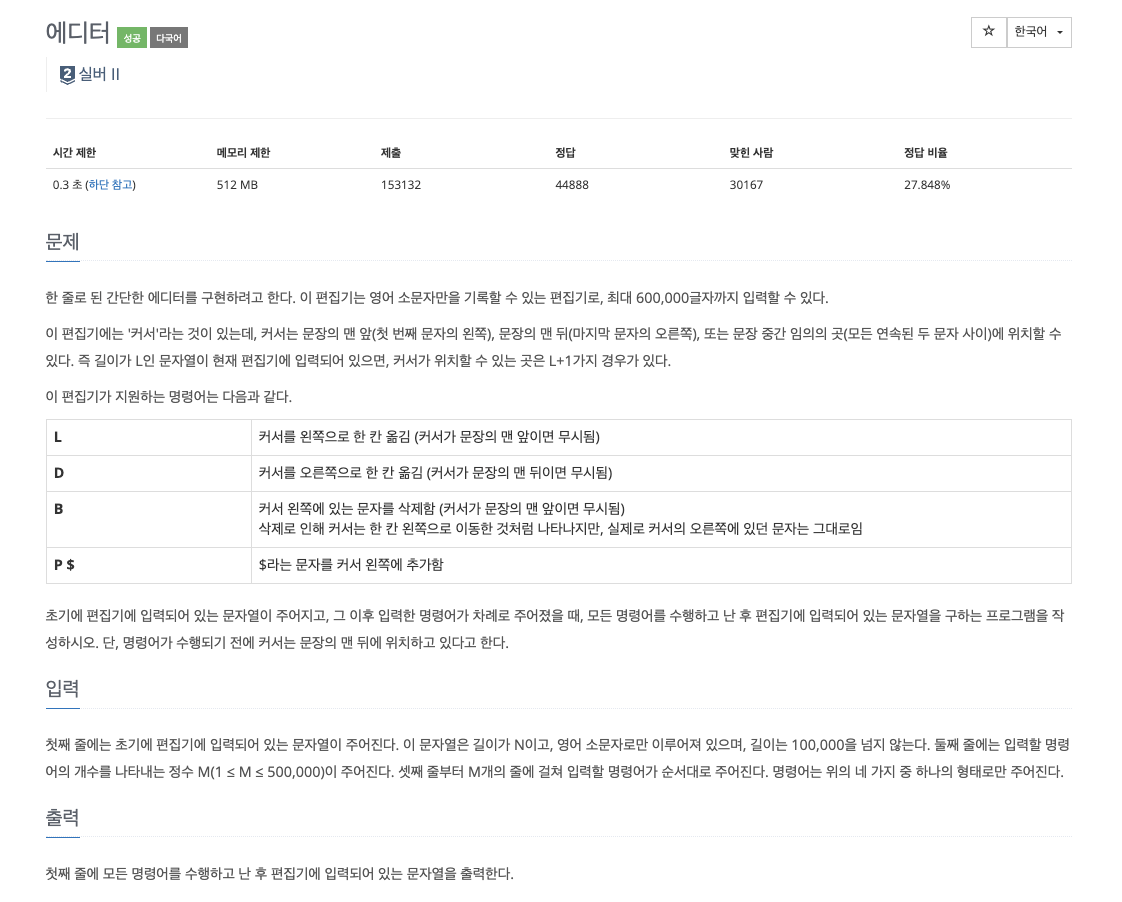
문제 1
My Solution
1
2
3
4
5
6
7
8
9
10
11
12
13
14
15
16
17
18
19
20
21
import sys
input = sys.stdin.readline

left = list(input().rstrip())
right= []

for _ in range(int(input())):
    command = list(input().split())
    if command[0] == 'L' and len(left) != 0:
        top = left.pop()
        right.append(top)
    elif command[0] == 'D' and len(right) != 0:
        top = right.pop()
        left.append(top)
    elif command[0] == 'B' and len(left) != 0 :
        left.pop()
    elif command[0] == 'P':
        left.append(command[1])

answer = left + right[::-1]
print(''.join(answer))
저는 처음 문제를 보고서 스택을 이용해서 구현을 했습니다.
강의에서는 연결 리스트로 구현을 하였으며 강의 내용 처럼 연결 리스트로도 구현을 해보겠습니다.
Lecture Solution
1
2
3
4
5
6
7
8
9
10
11
12
13
14
15
16
17
18
19
20
21
22
23
24
25
26
27
28
29
30
31
32
33
34
35
36
37
38
39
40
41
42
43
44
45
46
47
48
49
50
51
52
53
54
55
56
import sys
input = sys.stdin.readline

class ListNode:
    def __init__(self, val, next, prev):
        self.val = val
        self.prev = prev
        self.next = next

head = ListNode("head", None, None)
tail = ListNode("tail", None, None)

head.next = tail
tail.prev = head

cur = head

for c in list(input().rstrip()):
    new_node = ListNode(c, None, None)

    new_node.prev = cur
    new_node.next = tail

    cur.next = new_node
    tail.prev = new_node

    cur = new_node

cur = tail

for _ in range(int(input())):
    command = list(input().split())
    if command[0] == 'L':
        if cur.prev != head:
            cur = cur.prev
    elif command[0] == 'D':
        if cur != tail:
            cur = cur.next
    elif command[0] == 'B':
        if cur.prev != head:
            cur.prev.prev.next = cur
            cur.prev = cur.prev.prev
    elif command[0] == 'P':
        new_node = ListNode(command[1], None, None)

        new_node.prev = cur.prev
        new_node.next = cur

        cur.prev.next = new_node
        cur.prev = new_node

cur = head.next

while cur.val != 'tail':
    print(cur.val, end='')
    cur = cur.next
강의 주제에 맞는 연결리스트로 구현한 코드 입니다. 연결 리스트로 구현한 결과 스택 풀이보다 성능 면에서 4배 정도 느리고 더 많은 메모리가 필요했습니다.
💡 In Python
Python에는 STL에 linked list가 없다. 따라서, linked list 문제를 풀 때는 직접 구현해야 하는데 이는 상당히 번거로운 과정이다. 또한 linked list를 Python level에서 구현하게 되면, C로 구현되어 있는 STL 자료구조(e.g. deque)를 쓰는 것보다 오히려 비효율적일 수 있다.
따라서 최대한 linked list 없이 풀 수 있는 방법을 찾아보는 것이 좋다.
This post is licensed under CC BY 4.0 by the author.